
On-Site Acoustic Testing performs ASTM E1007 field impact-sound testing of installed floor/ceiling assemblies, including Apparent Impact Insulation Class (AIIC) measurements.
ASTM E1007 Impact Sound Testing
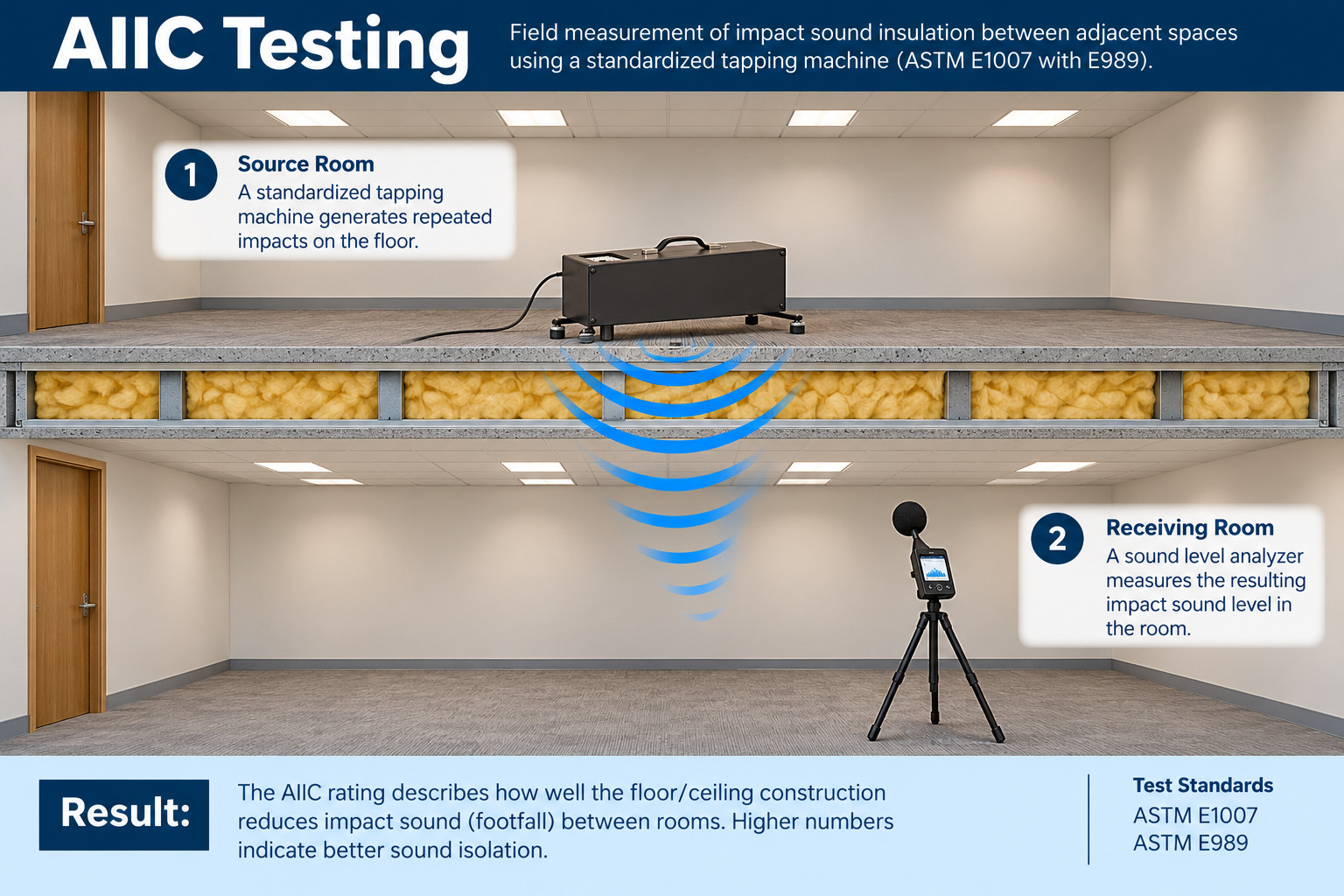
ASTM E1007 measures impact sound transmission through floor/ceiling assemblies and their associated supporting structures under field conditions. A standardized tapping machine operates on the floor above while the resulting impact sound is measured in the receiving space.
AIIC characterizes the apparent impact-isolation performance of the installed floor/ceiling assembly and adjacent structure, including the effects of structure-borne flanking paths. The standard also defines additional impact-sound metrics for particular room configurations and project requirements.
IIC Rating vs. AIIC Field Testing
Impact Insulation Class (IIC) is a laboratory rating of floor/ceiling impact isolation. Apparent Impact Insulation Class (AIIC) describes installed field performance, including structural and flanking transmission. An advertised IIC rating for flooring or underlayment is not a guarantee of the same AIIC rating in a completed building. OSAT uses ASTM E1007 field measurements and the applicable rating procedure.
When Is Impact Insulation Class Testing Needed?
Common applications include condominium and apartment floor-noise complaints, flooring changes, construction acceptance, and comparison of completed floor assemblies. The appropriate metric and acceptance criteria depend on the project. See commercial acoustics testing for related field verification.
Tapping Machine and Measurement Equipment
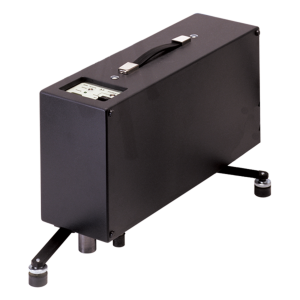
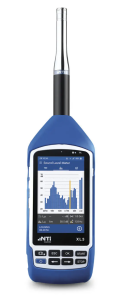
OSAT uses standardized tapping machines together with precision building-acoustics analyzers to measure the one-third-octave-band impact sound produced in the receiving room. Our current equipment supports field measurements for residential, commercial, institutional and other occupied buildings.
Flooring, Underlayments and Completed Assemblies
Field impact testing can be used to evaluate completed floor/ceiling construction, compare flooring or underlayment systems, investigate occupant complaints, document existing conditions, and verify performance against project or code criteria. Measurements can be performed on assemblies incorporating hard flooring, resilient finishes, carpet, floating floors and suspended ceilings where applicable.
Because field results include the influence of the installed structure and flanking transmission, they should not be assumed to duplicate laboratory IIC results for a nominally similar assembly.
ISR and NISR Impact Sound Ratings
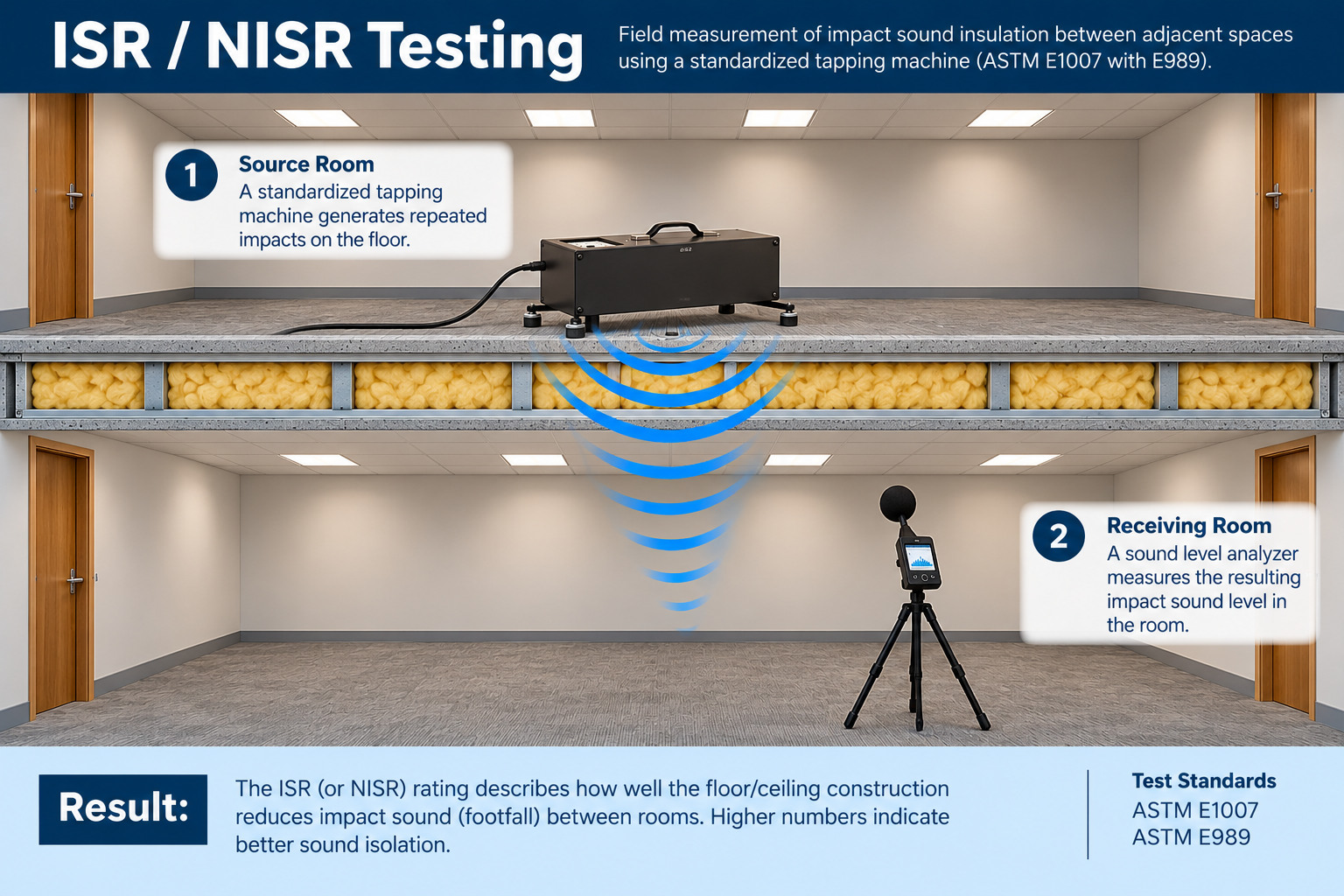
ASTM E1007 field impact measurements can yield Impact Sound Rating (ISR) and Normalized Impact Sound Rating (NISR), classified using ASTM E989. ISR describes impact isolation under existing receiving-room conditions. NISR describes isolation normalized to a 0.5-second receiving-room reverberation time. Neither is interchangeable with AIIC, which characterizes the apparent performance of an installed floor-ceiling assembly and associated flanking paths. ASTM E1007 limits NISR reporting to receiving rooms smaller than 150 m³, subject to other requirements. These ratings use a standardized tapping machine and a sound level analyzer. See the standards reference for more detail.
Interpreting Impact Sound Results and Investigating Failures
An AIIC result describes the measured performance of the installed floor/ceiling system under field test conditions; it is not the same as a laboratory IIC rating for a flooring product or assembly. When results fall short of project criteria, potential contributors include rigid connections at floor perimeters, incorrectly installed underlayment, changes in flooring finish, penetrations and structural flanking transmission. These possibilities require investigation rather than assumption: the measured spectrum, assembly details and site observations help determine the next step. After corrective work, repeat field measurements can document whether performance improved.
Related Building Acoustics Testing
- Building acoustics testing services
- ASTM E336 ASTC airborne sound-isolation testing
- ASTM E966 façade, window and door testing
Discuss Your Impact Sound Testing Requirements
Contact On-Site Acoustic Testing to discuss the floor/ceiling assembly, project criteria and field impact-sound measurement required.
